
Smile Line Fillers

Dermal Fillers for Smile Lines in Baner, Pune - Nasolabial Folds and Marionette Lines at Skinsure Clinic
Smile lines are one of the most common facial ageing concerns patients bring to Skinsure Clinic in Baner. They show up in photographs first – then in the mirror. And most patients who come in asking about them have already tried serums, creams and face yoga, none of which can address a structural change in the skin.
What most patients do not know: treating the fold line directly is often the wrong approach. Smile lines deepen because the cheek tissue above them has descended. Filling the line without lifting the cause gives an incomplete result – and sometimes makes the face look heavier, not lighter. The right approach for most patients starts higher up than the line itself.
At Skinsure Clinic in Baner, Pune, Dr. Rashmi Soni Lohiya plans smile line treatment by first assessing what is driving the fold – and then treating the cause as well as the visible line. The result looks lighter and more natural than direct fold filler alone.
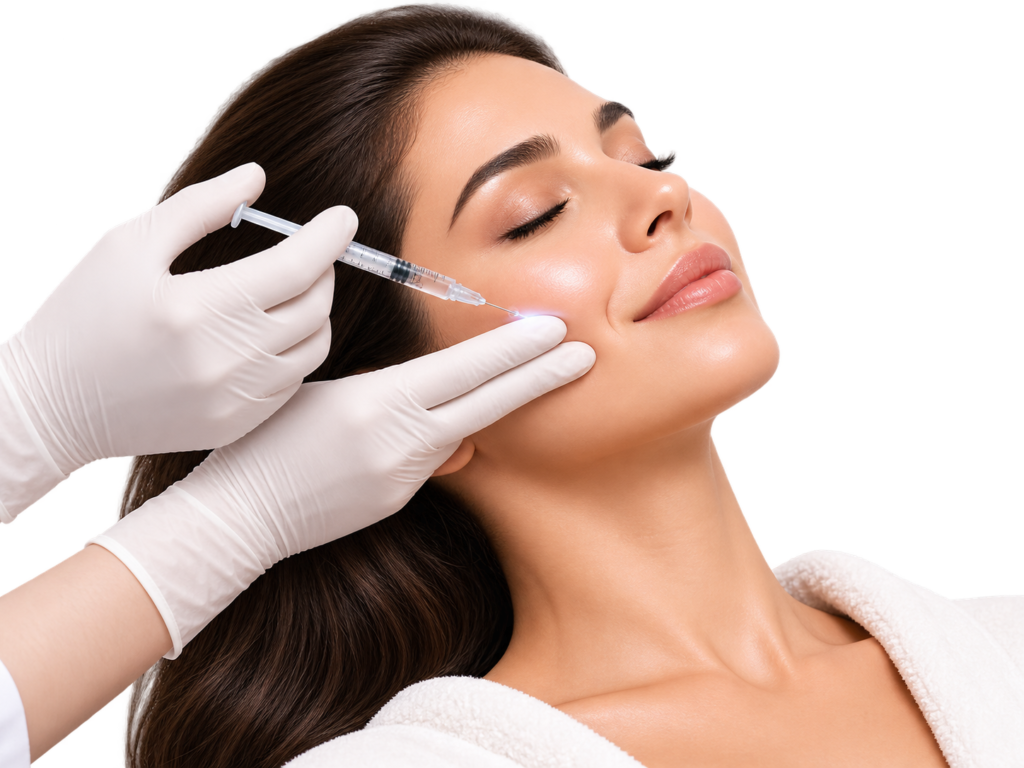
What Are Smile Lines and Why Do They Form?
Smile lines is a collective term patients use for the visible lines in the lower half of the face. They actually refer to two distinct anatomical structures with different causes and slightly different treatment approaches:
Nasolabial Folds - nose to mouth
The nasolabial folds run from the sides of the nose down to the corners of the mouth. A mild nasolabial fold is present from early adulthood and is entirely natural – it is the boundary between the cheek and the upper lip. The fold becomes a concern when it deepens significantly, creating a heavy crease that makes the face look tired or much older.
Why nasolabial folds deepen: the primary driver is descent of the medial cheek fat compartment from above. As this fat pad reduces and falls forward, it lands on the upper lip and deepens the fold. The fold itself is not the cause – it is the effect of what has happened above it. This is why treating the fold without addressing the midface often gives a result that looks stuffed or heavy at the fold level.
Marionette Lines - mouth to chin
Marionette lines run from the corners of the mouth downward toward the chin, creating the appearance of a downturned mouth or a puppet-like expression. They are driven by a combination of lower midface fat descent, loss of chin and jaw projection and gravitational soft tissue descent. Marionette lines also worsen with jowl formation because the jowl tissue pulling down on the corner of the mouth deepens the marionette crease.
Why marionette lines are harder to treat than nasolabial folds: nasolabial folds can be softened significantly with cheek filler and direct fold filler. Marionette lines require a combination of direct line filler, oral commissure filler (to lift the depressed corner of the mouth) and often chin filler (to improve the lower face projection that creates the jowl pulling the corner down). Treating marionette lines with only direct fold filler consistently produces incomplete results.
How Deep Are Your Smile Lines? The Grade System Explained
Not all nasolabial folds are treated the same way. The depth and character of the fold determines the treatment approach and realistic expected outcome. At Skinsure Clinic in Baner, Dr. Rashmi grades the fold before planning treatment:
Grade 1 - Fine Line (No Shadow)
What it looks like: A faint line visible mainly with facial expression. No shadow at rest. Seen from mid-20s in patients with expressive faces.
Treatment approach: Cheek filler alone is often sufficient – lifting the midface prevents the line from progressing. Direct fold filler usually not needed at this grade.
Grade 2 - Shallow Fold (Slight Shadow at Rest)
What it looks like: A visible line at rest with a slight depth to it. Creates a shadow in certain lighting. Most common in 30s and 40s.
Treatment approach: Cheek filler to lift the descending tissue + a small amount of direct nasolabial filler to smooth the remaining fold. 1 to 1.5ml total. Result: fold softened, face looks lifted.
Grade 3 - Moderate Fold (Definite Shadow)
What it looks like: A clear crease with shadow visible in most lighting. The fold is present at rest and deepens significantly with smiling. Very common in 40s and 50s.
Treatment approach: Cheek filler is the primary treatment. Direct nasolabial filler as secondary. Combined result is more complete than either alone. Volume planning is critical – overfilling the fold line at this grade looks artificial.
Grade 4 - Deep Fold (Clearly Visible Crease)
What it looks like: A deep, clearly defined fold that creates significant shadow and makes the face look heavy. Often accompanied by jowl formation.
Treatment approach: Combination plan: cheek filler + direct fold filler + possibly jaw or chin filler to address the lower face heaviness contributing to the crease. Realistic expectation: softening, not elimination. Full elimination of a Grade 4 fold with filler alone is not achievable without overcorrection.
Why Filling the Fold Line Directly Often Gives Incomplete Results
This is the clinical insight most patients never hear before their first fold filler appointment – and it explains why many patients who have had nasolabial filler elsewhere are unhappy with the result.
What happens when only the fold is filled:
- The filler adds volume in the crease - which softens the shadow and reduces the visible depth of the fold
- But the cheek tissue above the fold is still descended - still heavy, still pulling down
- The transition from the upper cheek to the fold area remains abrupt - the face can look "stuffed" at the fold level
- Patients often report feeling a bump when they touch the nasolabial area, or noticing that the mid-face looks flat while the fold area looks full
- This is the characteristic "pillow face" that occurs when fold lines are treated without addressing the structural descent above
What happens when the cheek is treated first:
- Cheek filler lifts the descended medial fat pad upward, reducing the weight sitting on the fold from above
- The nasolabial fold softens as a cascade effect - without any filler in the fold itself
- The transition from cheek to fold is smooth rather than abrupt
- Any remaining fold depth can then be addressed with a small amount of direct filler for a more complete result
- The overall appearance is a lighter, lifted face rather than a face with filled lines
Stay in the touch.
Unlock the secrets to radiant skin by staying in touch with Skinsure Clinic. Join our community for expert skincare tips, exclusive offers, and the latest updates on revolutionary treatments
How Dr. Rashmi Treats Smile Lines at Skinsure Clinic, Baner
Step 1 - Assessment: Which approach does this face need?
- Grade of the fold (1 to 4)
- Degree of midface descent - is the cheek descended? Is there a flattened midface?
- Volume loss above the fold - is the medial cheek compartment reduced?
- Lower face heaviness - are marionette lines present? Is the corner of the mouth depressed?
- Patient age, skin quality and volume already present in the face
Step 2 - Cheek filler first (where midface descent is the primary driver)
- Structural filler placed at the cheekbone level to lift the descended medial fat
- Upward lifting vector - not horizontal projection
- Typically 0.5 to 1ml per side at the cheek before any fold filler is placed
- The fold is reassessed after cheek filler - in many patients with Grade 1 to 2 folds, the fold softens sufficiently without any direct treatment
Step 3 - Direct nasolabial fold filler (where fold remains after cheek lift)
- A softer, more flexible HA product than used for cheeks - the nasolabial area is mobile and a stiff product feels unnatural
- Injected along the length of the fold in small deposits using a fine needle or cannula
- Goal: smooth the remaining crease, not fill it until it disappears
- Typical volume: 0.3 to 0.5ml per side in the fold itself after cheek filler is placed
Step 4 - Marionette lines (where present)
- Direct filler in the marionette line - a mid-firmness HA product placed along the line
- Oral commissure filler - a small depot at the depressed corner of the mouth to lift it
- Chin filler where the lower face projection deficit is contributing to the marionette appearance
- Assessment: which of these three components is dominant, and treat that first
What to Expect - Smile Line Filler Session at Skinsure Clinic, Baner, Pune
During the session:
- Duration: 30 to 45 minutes for nasolabial folds plus cheek; 45 to 60 minutes if marionette lines are also treated
- Topical numbing cream applied 20 minutes before
- Cannula used for the nasolabial fold area in most cases - reduces bruising significantly in this mobile, vascular area
- Mild pressure and movement under the skin during injection - not sharp pain
After the session:
- Mild swelling and possible mild bruising in the lower face for 2 to 5 days
- The nasolabial area swells slightly more than the cheek - the fold may look more prominent for the first 24 to 48 hours before settling
- Avoid vigorous facial movement, massage and extreme heat for 48 hours
- Makeup can be applied the following morning
Results and duration:
- Final result visible at day 10 to 14 when all swelling resolves
- Nasolabial fold filler: 9 to 12 months
- Cheek filler placed at the same session: 12 to 18 months
- Marionette line filler: 9 to 12 months
- Top-up at 9 to 12 months maintains the result continuously
Frequently Asked Questions - Smile Line Fillers in Baner, Pune
The most effective approach for smile lines (nasolabial folds and marionette lines) combines cheek filler with direct fold filler. The nasolabial fold deepens because the midface fat above it has descended - filling the fold alone without addressing the descent gives an incomplete and sometimes heavy-looking result. At Skinsure Clinic in Baner, Dr. Rashmi first assesses the degree of midface descent and places cheek filler to lift the descended tissue. The nasolabial fold then softens as a cascade effect, and a smaller amount of direct filler completes the treatment. This combined approach consistently produces more natural-looking results than direct fold filler alone.
Done correctly, smile line filler makes the face look lighter and more refreshed - not heavier. The "heavy" or "stuffed" appearance that some patients fear is almost always the result of too much product placed directly in the fold without addressing the structural descent above it. At Skinsure Clinic in Baner, Dr. Rashmi uses the minimum effective volume, treats the cause (midface descent) alongside the fold, and grades the expected outcome honestly at the consultation. Patients with Grade 3 or 4 nasolabial folds are told explicitly that the goal is softening the fold, not eliminating it - and that this conservative approach consistently produces the most natural-looking result.
Nasolabial fold filler typically lasts 9 to 12 months. Cheek filler placed at the same session lasts longer - 12 to 18 months - because the cheek area has lower muscle movement than the perioral (around the mouth) area. Marionette line filler lasts 9 to 12 months. A top-up session at 9 to 12 months maintains the improvement continuously. Patients who maintain regular sessions find the fold stays at a consistently softer grade over time, and subsequent sessions require slightly less product than the original treatment.
Yes - for Grade 1 and some Grade 2 nasolabial folds, cheek filler alone produces sufficient softening of the fold without any direct treatment. This is one of the cascade effects of correctly placed cheek filler: lifting the descended medial fat pad reduces the weight bearing down on the fold from above. Many patients who come to Skinsure Clinic in Baner expecting nasolabial fold filler leave with cheek filler instead - and achieve a more natural, lifted result without a single drop of product in the fold itself. This is possible only when the fold is assessed structurally, not just as a line to be filled.
Skinsure Clinic offers smile line and nasolabial fold filler treatment in Baner, Pune, led by Dr. Rashmi Soni Lohiya - a dermatologist with 23 years of experience and specialist cosmetology training. The clinic is at the 7th floor of Lunawat Apex, Baner Road, behind the Nexa showroom, near Sadhu Vaswani Nagar, Aundh, Pune 411007. Easily accessible from Baner, Aundh, Balewadi, Wakad, Hinjewadi and PCMC. Call 099606 03380 to book a consultation.