
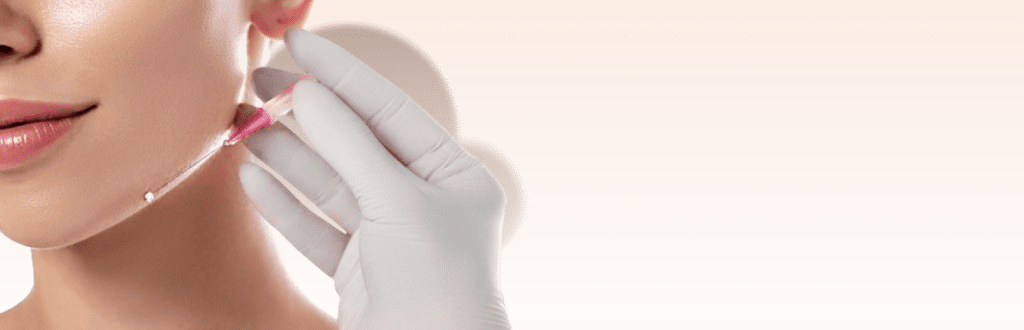
threads

Thread Lift Treatment in Baner, Pune - Non-Surgical Face Lifting at Skinsure Clinic
Some patients want a lift that is visible right away – not a gradual improvement over three months, but something they can see in the mirror within a day or two of the procedure. Thread lift delivers exactly that.
A thread lift is a non-surgical procedure that uses fine dissolvable threads inserted beneath the skin to physically lift and reposition facial tissue. The threads catch and hold the skin in a lifted position immediately, while also stimulating new collagen around them as they gradually dissolve over the following months. The result is a combination of an instant visual lift and a progressive skin quality improvement that builds over time.
At Skinsure Clinic in Baner, Pune, Dr. Rashmi Soni Lohiya performs thread lift treatments for the face, jawline, brow, neck and nose. Every procedure is planned and mapped individually – the placement, depth and number of threads is specific to each patient’s anatomy, not a standard protocol applied to everyone.

What Is a Thread Lift? The Honest Explanation
A thread lift is a minimally invasive facial rejuvenation procedure. Fine threads – made from materials that dissolve safely in the body over time – are inserted beneath the skin using a thin needle or cannula. Once placed, the threads are gently pulled to lift the overlying skin and tissue into a higher position.
The threads have small cones, barbs or coils along their surface that grip the tissue and hold it in place. This mechanical grip is what provides the immediate lifting effect you see right after the procedure. As the threads dissolve over the next 6 to 12 months, they leave behind new collagen that helps maintain the lift and improves the skin structure in the treated area.
What makes thread lifts different from every other non-surgical treatment is the immediacy. HIFU, skin boosters and most energy-based treatments produce results gradually over weeks to months. A thread lift produces a visible structural change within 24 to 48 hours of the procedure. For patients who want a result they can see quickly – before a significant event, for example – this immediate effect is the primary draw.
PDO vs PLLA Threads - What Is the Difference?
The two main types of dissolvable threads used in aesthetic medicine are PDO and PLLA. Both dissolve in the body over time and both stimulate collagen, but they have different properties, different longevity and different uses.
PDO Threads (Polydioxanone)
PDO is a synthetic suture material that has been used in cardiac and orthopaedic surgery for decades. In thread lifts, PDO threads come in multiple configurations: smooth threads (for collagen stimulation only), twisted or spiral threads (for skin tightening) and barbed or cog threads (for structural lifting). PDO threads dissolve within 6 to 8 months. They are the most widely used thread type and are well-suited for mild to moderate lifting and skin quality improvement.
PLLA Threads (Poly-L-Lactic Acid)
PLLA is a biodegradable polymer that dissolves more slowly than PDO – taking 12 to 18 months. PLLA threads produce a stronger and longer-lasting collagen stimulation response compared to PDO. They are generally preferred for patients who want more significant lifting results with a longer duration of effect. The collagen stimulation from PLLA continues even after the thread itself has dissolved, which is why the overall result often lasts longer than the thread’s physical presence in the skin.
What Areas Can a Thread Lift Treat?
Thread lift treatment in Baner, Pune at Skinsure Clinic covers the following areas:
Mid-Face and Cheek Lift
The mid-face is typically where thread lifts have the most visible effect. Threads placed along the cheekbone vector lift the heavy tissue of the lower cheek, reduce nasolabial fold depth and restore a more youthful midface contour. This is the most commonly requested thread lift zone.
Jawline Definition
Barbed or cog threads placed along the jawline lift the jowl tissue and redefine the jaw edge. This is often combined with dermal filler along the jaw for patients who need both structural definition and skin lifting. A thread lift provides the mechanical repositioning; filler provides the contouring.
Brow Lift
A thread lift can elevate the outer brow by 2 to 4 millimetres – enough to open the eye area, reduce the appearance of upper eyelid heaviness and give a more alert, refreshed look. This is a subtle but effective change that patients notice immediately. Thread brow lifts are a popular alternative to surgical brow lift for patients with mild to moderate brow descent.
Neck Lifting and Tightening
Loose skin on the neck and the early formation of neck bands respond well to PDO smooth threads placed in a grid pattern – these stimulate collagen in the neck skin without a lifting component. For patients with more significant neck laxity, lifting threads can be used to reposition the neck tissue upward and improve the neck-to-chin angle.
Nose Thread Lift (Non-Surgical Rhinoplasty)
PDO or PLLA threads inserted along the nose bridge or at the tip can lift a drooping tip, project the nose slightly and refine the nose profile without surgery. The result is subtle – a 2 to 4 mm tip elevation or a more defined bridge line. The effect lasts 6 to 12 months. This is a more niche application but one that patients with a mildly drooping nasal tip find highly effective.
How Does a Thread Lift Procedure Work at Skinsure Clinic?
The procedure is done entirely in the clinic – no operating theatre, no general anaesthesia. Here is exactly what happens:
1. Consultation and Thread Mapping
Dr. Rashmi examines your face, marks the thread entry points and exit points, and explains exactly what lifting vector each thread will take. Thread mapping is the most important part of the procedure – where the threads are placed determines everything about the result.
2. Local Anaesthesia
Local anaesthetic is injected along the thread path before insertion. This means the procedure itself is comfortable – most patients feel mild pressure during thread insertion but not pain.
3. Thread Insertion
A fine needle or blunt cannula is used to create an entry channel in the skin. The thread is loaded into the needle and inserted along the mapped path beneath the skin. For lifting threads, the barbs or cones on the thread catch the tissue as the needle is withdrawn.
4. Tissue Repositioning
Once the thread is in position, Dr. Rashmi gently lifts and repositions the tissue by pulling the thread upward and anchoring it at the entry point. The immediate lift is visible at this stage. Any asymmetry is corrected before the procedure is completed.
5. Trimming and Completion
The thread end is trimmed flush with the skin or anchored to a deeper tissue point. The skin is checked for dimpling, which is gently massaged out. The entry point is a tiny puncture that heals within a few days.
Immediate Result
The lifting effect is visible immediately after the procedure. Some swelling and puffiness in the first 1 to 3 days makes the result look slightly exaggerated initially – the natural settled result is visible at 2 to 4 weeks once all tissue swelling resolves.
Thread Lift vs HIFU vs Surgical Facelift - Which Is Right for You?
This is one of the most common questions at the Skinsure Clinic consultation. All three can lift the face – but they work differently, suit different stages of skin ageing and produce different results.
Thread Lift vs HIFU
A thread lift produces a visible, immediate mechanical lift by physically repositioning tissue. HIFU produces a gradual improvement over 2 to 3 months by stimulating collagen at deep structural levels. For patients who want to see a change quickly, thread lift wins. For patients who prefer no foreign material in the skin and are comfortable with a gradual improvement, HIFU is better. Many patients combine both – HIFU for foundational skin tightening and thread lift for additional mechanical lifting, done a few weeks apart.
Thread Lift vs Surgical Facelift
A surgical facelift produces the most dramatic and longest-lasting lifting result – typically lasting 7 to 10 years. It involves general or local anaesthesia, incisions, a recovery period of 2 to 3 weeks and a significantly higher cost. A thread lift produces a more subtle lift that lasts 12 to 24 months, with no incisions, no general anaesthesia and a recovery of 1 week at most. Thread lift is not a replacement for surgery in patients with very significant skin sagging – but for mild to moderate laxity, it delivers a meaningful result without any of the surgical commitment.
Thread Lift vs Dermal Fillers
Fillers add volume – they are best for hollow areas, thin lips and loss of facial fullness. Thread lifts reposition tissue – they are best for sagging or descent of facial structure. Both address different concerns. Combined, they work very well: threads lift what has fallen, fillers restore what has deflated. Dr. Rashmi often plans thread lift and filler treatments in the same session or in close sequence for patients who need both.
Recovery After Thread Lift - What to Expect Day by Day
Day 1 to 3
Mild swelling, tenderness and slight bruising are normal in the first 48 to 72 hours. The lift looks slightly more dramatic than the final result at this stage because of swelling. Avoid pressing, massaging or stretching the face in the treated direction. Sleep on your back with your head slightly elevated.
Day 3 to 7
Swelling reduces progressively. Small dimples or puckering at the thread entry point or along the thread path may be visible – this is normal and self-resolves as the tissue settles around the thread. Avoid strenuous exercise, saunas and swimming for the first week.
Week 2 to 4
The final, settled result becomes visible as all swelling resolves and the tissue fully accommodates the thread position. Most patients see their true result at 3 to 4 weeks. Any residual puckering that has not resolved at this point is reviewed and gently massaged by Dr. Rashmi at the follow-up visit.
Month 2 to 6
Collagen production around the threads builds progressively. The skin in the treated area gradually improves in texture and firmness. Even as the thread begins to dissolve at 6 to 8 months (PDO) or 12 to 18 months (PLLA), the new collagen it has stimulated continues to support the lift.
Who Is a Good Candidate for a Thread Lift?
Thread lifts work best for patients in a specific age and skin laxity range. Here is an honest breakdown:
Ideal Candidates
- Age 30 to 60 with mild to moderate skin sagging on the face, neck or brow
- Patients who have noticed that their cheeks have dropped or their jawline has softened
- Patients who want a visible improvement before a significant event in 2 to 4 weeks
- Patients who want to delay or complement a surgical facelift rather than replace it
- Patients who have already had HIFU or fillers and want an additional mechanical lifting component
Not Ideal Candidates
- Patients with very significant skin laxity or excess skin - threads cannot hold very heavy tissue
- Patients with very thin skin where threads may be visible or palpable
- Active skin conditions (infection, acne, eczema) in the treatment area
- Patients on blood thinners or certain medications - assess with Dr. Rashmi at consultation
- Patients with unrealistic expectations - a thread lift improves, it does not restore 20-year-old skin
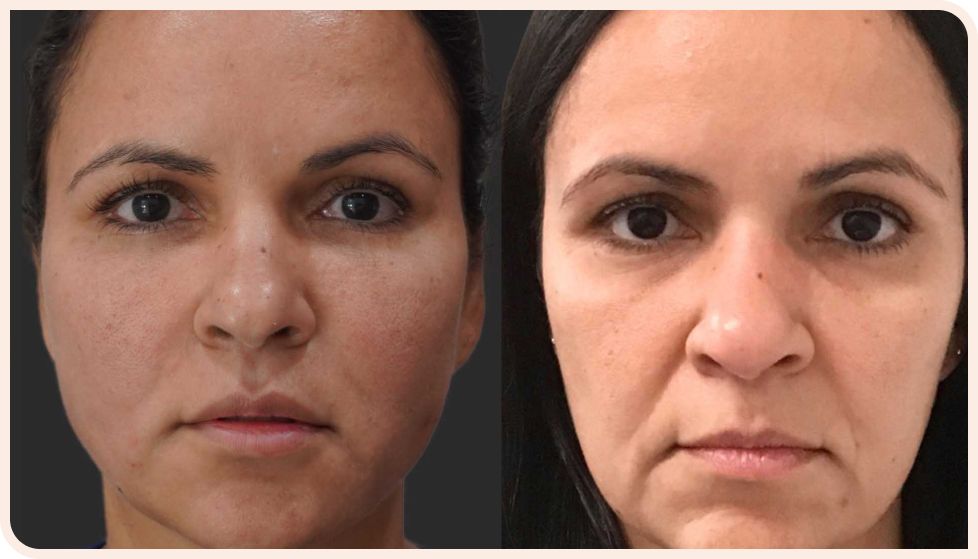
results
Frequently Asked Questions - Thread Lift Treatment in Pune
A thread lift is a minimally invasive procedure where fine dissolvable threads are inserted beneath the skin to mechanically lift and reposition facial tissue. No incisions, no general anaesthesia and no hospital stay are required. The threads dissolve over 6 to 18 months and stimulate collagen as they do so. A surgical facelift, by contrast, involves incisions, lifting and repositioning of deeper facial structures under general anaesthesia, with a recovery period of 2 to 3 weeks and results lasting 7 to 10 years. A thread lift suits patients with mild to moderate skin laxity who want visible improvement without surgery. It is not a replacement for surgery in advanced sagging.
Thread lift is performed under local anaesthesia, so the procedure itself is comfortable - patients feel mild pressure during thread insertion but not sharp pain. After the procedure, mild swelling, tenderness and occasionally bruising are present for 2 to 5 days. Most patients are back to normal social activity within 5 to 7 days. The final settled result is visible at 2 to 4 weeks. Avoid strenuous exercise, saunas, face massage and dental procedures for the first 3 to 4 weeks.
PDO thread lift results typically last 12 to 18 months. PLLA thread lift results last 18 to 24 months. The threads themselves dissolve before this - at 6 to 8 months for PDO and 12 to 18 months for PLLA - but the collagen stimulated by the threads continues to support the lift beyond the thread's physical presence. The treatment can be repeated after 12 to 18 months. Many patients combine thread lift with a HIFU session done 4 to 6 weeks before or after, which extends the overall result significantly.
PDO (Polydioxanone) threads dissolve in 6 to 8 months and are well-suited for most first-time thread lift patients. They provide good lifting and collagen stimulation and are available in multiple configurations - smooth, twisted and barbed. PLLA (Poly-L-Lactic Acid) threads dissolve more slowly, over 12 to 18 months, and produce a stronger and longer-lasting collagen response. PLLA is preferred when a more significant lift or longer duration is the goal. Dr. Rashmi selects the appropriate thread type based on the area being treated, your skin laxity and how long you want results to last.
Yes. Patients from Balewadi, Aundh, Wakad, Pashan, Hinjewadi, Pimple Saudagar and across PCMC visit Skinsure Clinic for thread lift treatment. The clinic is at the 7th floor of Lunawat Apex, Baner Road, behind the Nexa showroom near Sadhu Vaswani Nagar, Aundh, Pune 411007. Call 099606 03380 to book your consultation.