
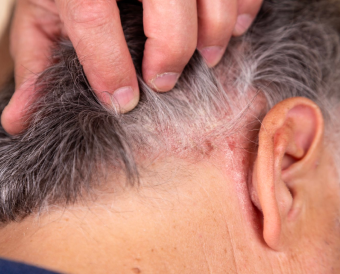
Psoriasis

Psoriasis Treatment in Baner, Pune - Long-Term Skin Management at Skinsure Clinic
Psoriasis is not a skin hygiene issue, an allergy or an infection. It is a chronic autoimmune condition – one where the immune system sends faulty signals that cause skin cells to multiply up to ten times faster than normal. The result is the thick, scaly plaques most people associate with the condition. But psoriasis can also appear as small scattered spots, smooth inflamed patches in skin folds, painful pustules, nail changes or joint inflammation.
The condition affects roughly 2 to 3% of the global population – approximately 2.5 to 3 crore people in India. In Pune, the combination of dry winters, humidity fluctuations and urban stress makes it one of the more commonly seen chronic skin conditions in dermatology clinics.
At Skinsure Clinic in Baner, Pune, Dr. Rashmi Soni Lohiya manages psoriasis with an approach built on two principles: accurate classification of the type and severity first, and a treatment plan that balances clearance with long-term safety. Psoriasis cannot be cured, but with the right management, most patients spend more time in remission than in flare.
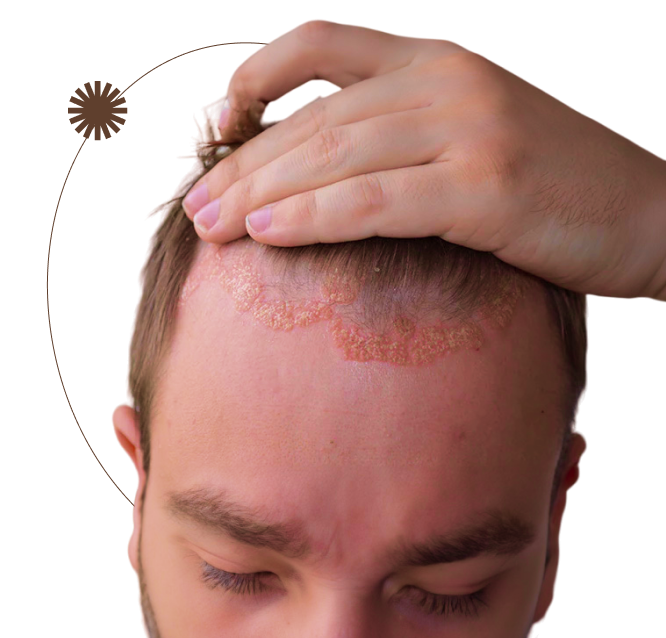
What Is Psoriasis? Understanding the Condition Before Treatment
Psoriasis is an immune-mediated inflammatory skin condition. In a normal skin cycle, cells take 21 to 28 days to mature and shed. In psoriasis, this cycle is compressed to 3 to 5 days – cells build up on the surface faster than they can shed, forming the characteristic raised plaques.
Key Clinical Facts About Psoriasis
- Psoriasis is not contagious - it cannot spread from person to person or by touch
- It has a genetic component: if one parent has psoriasis, the risk in children is approximately 15 to 25%. With both parents affected, it rises to 50 to 60%
- It is a systemic condition - beyond the skin, psoriasis is associated with increased cardiovascular disease risk, metabolic syndrome and depression
- Psoriasis follows a relapsing-remitting pattern - periods of flare followed by partial or complete clearance
- Approximately 30% of patients with psoriasis develop psoriatic arthritis - joint inflammation that requires rheumatology co-management
- Nail psoriasis affects up to 50% of psoriasis patients - often overlooked as a fungal nail infection
- Psoriasis is chronic - the goal of treatment is long remission with the fewest side effects, not a one-time cure
Types of Psoriasis - What Dr. Rashmi Diagnoses and Treats in Baner
Psoriasis is not one condition with one appearance. Identifying the type correctly determines everything about how it is treated. Dr. Rashmi classifies each case by type, body surface area involvement and PASI (Psoriasis Area and Severity Index) score before designing a treatment plan.
| Type | Who It Affects | What It Looks Like | Prognosis and Treatment Direction |
|---|---|---|---|
| Plaque Psoriasis | Most common – affects 80 to 90% of psoriasis patients. | Thick, raised, red patches with silvery-white scales. Appears on elbows, knees, scalp and lower back most commonly. Patches can merge over larger areas. | Good with topical treatment for mild cases. Moderate to severe requires combination approach. Chronic with relapsing pattern. |
| Scalp Psoriasis | Plaque psoriasis affecting the scalp. | Thick silvery plaques on the scalp, often extending past the hairline onto the forehead, neck or behind the ears. Associated with itching and temporary hair fall. | Requires scalp-specific formulations. Medicated shampoos combined with topical solutions and in some cases intralesional injections. |
| Guttate Psoriasis | Triggered by streptococcal throat infection, common in children and young adults. | Small, drop-shaped red spots that appear suddenly across the trunk, arms and legs. Often first episode of psoriasis in younger patients. | Often self-limiting. Many cases resolve with treatment of the streptococcal trigger. Some progress to chronic plaque psoriasis. |
| Inverse Psoriasis | Psoriasis affecting skin folds and flexural areas. | Smooth, red, shiny patches in skin folds; groin, armpits, under the breasts, around the navel. No scaling because friction and moisture prevent it. | Requires special formulations tolerated by sensitive fold skin. Low-potency steroids and calcineurin inhibitors preferred. |
| Pustular Psoriasis | Autoimmune – white pus-filled blisters on reddened skin. Non-infectious. | White pustules on red skin. Can be localised to palms and soles (palmoplantar pustulosis) or widespread (Von Zumbusch – a medical emergency). | Requires specialist management. Systemic treatment usually needed. Widespread pustular psoriasis requires urgent medical attention. |
| Nail Psoriasis | Psoriasis affecting the nail unit. | Nail pitting (small dents), yellowish-brown discolouration (oil drop sign), nail thickening, onycholysis (nail detachment). Affects up to 50% of psoriasis patients. | Slow to respond. Intralesional nail injections or systemic therapy for significant nail involvement. |
| Psoriatic Arthritis | Autoimmune joint inflammation associated with psoriasis. | Joint pain, swelling and stiffness especially in fingers and toes (dactylitis), lower back (sacroiliitis) and larger joints. Affects around 30% of psoriasis patients. | Requires rheumatology co-management. Dermatological treatment coordinated with joint disease management. |
What Triggers Psoriasis Flares - And How to Manage Them in Pune
Psoriasis does not flare randomly. There are identifiable triggers that worsen or initiate episodes in predisposed individuals. Identifying and reducing triggers is a core part of long-term psoriasis management at Skinsure Clinic – not just prescribing topicals and waiting.
| Trigger | Which Type It Affects | Clinical Significance |
|---|---|---|
| Throat Infection (Streptococcal) | Guttate psoriasis, new-onset plaque psoriasis | Psoriasis flare typically appears 2 to 3 weeks after the throat infection. Treating the infection reduces the flare severity. |
| Stress (Emotional or Physical) | All types – most commonly plaque and scalp psoriasis | Stress activates inflammatory pathways that worsen immune dysregulation. Stress management is part of long-term psoriasis care. |
| Skin Injury (Koebner Phenomenon) | Plaque psoriasis – new plaques appear at sites of skin trauma | A scratch, sunburn, insect bite or surgical scar can trigger a new psoriasis plaque at the site of injury within 1 to 2 weeks. |
| Certain Medications | All types | Beta-blockers, lithium, antimalarials and NSAIDs are known psoriasis triggers. Do not stop prescribed medication without medical advice. Inform Dr. Rashmi of all medications during consultation. |
| Alcohol Consumption | Plaque psoriasis – worsens severity and reduces treatment response | Alcohol increases inflammation and interferes with methotrexate and other systemic treatments. Abstinence or reducing alcohol intake improves treatment outcomes significantly. |
| Smoking | Palmoplantar pustulosis and plaque psoriasis | Strongly associated with psoriasis severity and treatment resistance. Palmoplantar pustulosis in particular is closely linked to smoking. |
| Obesity | All types – worsens severity and increases cardiovascular risk | Fat tissue produces pro-inflammatory cytokines that worsen psoriasis. Weight reduction improves treatment response, especially for biologic therapies. |
| Climate: Dry Winters in Pune | Plaque and scalp psoriasis | Low humidity dries the skin barrier and worsens plaque scaling. Winter is the most common flare season for Pune patients. |
How Psoriasis Is Diagnosed at Skinsure Clinic, Baner
Psoriasis diagnosis is primarily clinical – meaning a trained dermatologist can usually identify it by examining the skin and its features. However, accurate classification of type and severity requires structured assessment.
Clinical Skin Examination
Distribution, plaque morphology, scaling pattern and Auspitz sign (pinpoint bleeding when scale is lifted) assessed. Nail, scalp and joints examined routinely.
Dermatoscopy
Dermoscope reveals the classic dotted vessels in regular arrangement that confirm psoriasis – distinguishes it from eczema, seborrhoeic dermatitis and pityriasis rosea.
PASI Score Assessment
Psoriasis Area and Severity Index scored at first visit. Tracks treatment response objectively. Mild: PASI below 10. Moderate: 10 to 20. Severe: above 20.
Nail and Joint Examination
Nails checked for pitting, oil-drop sign and onycholysis. Joints assessed for swelling, tenderness and range of motion to screen for psoriatic arthritis.
Blood Work
Baseline investigations before systemic therapy: CBC, LFT, RFT, fasting glucose, ESR and CRP. Streptococcal swab where guttate psoriasis is suspected.
Comorbidity Screening
Blood pressure, BMI, lipid profile. Psoriasis is associated with metabolic syndrome, hypertension and cardiovascular disease – these are assessed and referred appropriately.
Psoriasis Treatments Offered at Skinsure Clinic, Baner, Pune
The choice of psoriasis treatment in Baner, Pune depends entirely on the type of psoriasis, the body surface area affected, the PASI score and the patient medical history. Mild disease is managed with topicals. Moderate to severe disease requires systemic therapy or phototherapy. Dr. Rashmi does not prescribe systemic treatment for mild psoriasis or leave severe disease undertreated with topicals alone.
| Treatment | Best For | How It Works | Expected Timeline |
|---|---|---|---|
| Topical Corticosteroids | Mild to moderate plaque psoriasis, scalp psoriasis, inverse psoriasis | First-line treatment. Anti-inflammatory steroid applied directly to plaques. Strength selected based on body site—stronger for thick plaques on elbows and knees, lower-potency for face and skin folds. | 2 to 4 weeks for visible plaque reduction. Used in cycles to prevent steroid thinning of skin. |
| Vitamin D Analogues (Calcipotriol) | Mild to moderate plaque psoriasis—used alone or in combination with steroids | Slows rapid skin cell turnover (the core mechanism of plaque formation). No skin-thinning side effect. Can be combined with steroid in a fixed-dose formulation. | 4 to 8 weeks for initial improvement. Longer-term use is safe as maintenance. |
| Calcineurin Inhibitors (Tacrolimus) | Inverse psoriasis, face, scalp and sensitive areas where steroids are not suitable | Immunomodulator that reduces T-cell activation driving plaque formation. Steroid-sparing option for sensitive skin areas. | 4 to 6 weeks for improvement. Preferred for long-term use on the face or skin folds. |
| Medicated Scalp Shampoos | Scalp psoriasis—first-line adjunct treatment | Coal tar, salicylic acid or ketoconazole-based prescription shampoos reduce scaling, inflammation and itch on the scalp. Not the same as OTC dandruff shampoos. | 2 to 4 weeks for reduced scaling. Ongoing use as maintenance. |
| Topical Scalp Solutions and Foams | Scalp psoriasis—second-line or combination treatment | Steroid or calcipotriol-betamethasone formulations in a scalp-compatible solution or foam base. Easier to apply on the scalp than creams. | 4 to 8 weeks for plaque clearance on the scalp. |
| Intralesional Corticosteroid Injection | Resistant localized plaques, nail psoriasis, scalp psoriasis plaques | Corticosteroid injected directly into a resistant plaque or nail fold. Rapid and targeted response where topical treatments are not penetrating adequately. | 2 to 4 weeks per injection session. Monthly sessions for nail psoriasis. |
| Systemic Therapy (Methotrexate, Acitretin) | Moderate to severe psoriasis, pustular psoriasis, psoriatic arthritis | Oral prescription systemic treatment that reduces immune overactivity driving skin cell turnover. Methotrexate requires regular blood monitoring. Acitretin is used for pustular psoriasis. | 4 to 8 weeks for initial response. Long-term with regular monitoring. Coordinated with Dr. Rashmi and, where needed, rheumatology. |
| Phototherapy (NB-UVB) – Referral | Moderate to severe plaque psoriasis covering larger body surface areas | Narrowband UVB light suppresses the immune cells in the skin driving psoriasis. Safe and effective, especially for widespread psoriasis. | 20 to 30 sessions over 8 to 10 weeks for initial clearance. Referral to a phototherapy facility managed by Dr. Rashmi. |
| Scalp Mesotherapy | Scalp psoriasis with secondary hair fall and scalp inflammation | Micro-injection of anti-inflammatory agents and scalp nutrients to calm the psoriatic scalp and support follicle recovery from inflammation. | 4 to 6 sessions. Scalp improvement is typically seen within 3 to 4 weeks. |
What to Expect After Psoriasis Treatment - Recovery and Timelines
Psoriasis treatment is measured in weeks and months, not days. Setting accurate expectations at the start of treatment is something Dr. Rashmi emphasises at every first consultation. The table below gives specific, honest timelines for each treatment used at Skinsure Clinic.
| Treatment | Session | Immediate Effects | Post-Care | Timeline to Results |
|---|---|---|---|---|
| Topical Corticosteroids | Daily home application | None. Mild skin warmth in the first few days. | Apply as prescribed. Do not use continuously for more than 4 weeks without review. Avoid face and skin folds unless specifically prescribed. | Plaque reduction: 2–4 weeks. Significant clearance: 4–8 weeks. |
| Vitamin D Analogues | Daily home application | Mild local irritation in the first week for some patients. | Avoid application on the face or sensitive skin unless prescribed. Wash hands after applying. | Noticeable improvement: 4–8 weeks. Best results at around 12 weeks of continuous use. |
| Medicated Scalp Shampoo | Home use; prescribed frequency | None. Mild scalp tingling is possible with coal tar formulations. | Leave on for 5–10 minutes before rinsing as instructed. Do not use more frequently than prescribed. | Scaling reduction: 2–4 weeks. Plaque softening: 4–6 weeks. |
| Intralesional Injection | 15–20 minutes in clinic | Mild tenderness at injection sites for 2–4 hours. | Avoid scratching or rubbing the injected area for 24 hours. | Plaque flattening: 2–4 weeks. Full response assessed at the next visit (4–6 weeks). |
| Scalp Mesotherapy | 20–30 minutes in clinic | Pinpoint redness and mild itching for 12–24 hours. | Avoid washing hair for 6–8 hours. Avoid direct sun exposure on the scalp for 24 hours. | Scalp inflammation reduction: 2–3 sessions. Hair recovery: 2–3 months. |
| Systemic Therapy (Methotrexate) | Weekly oral or injectable dose | Mild nausea or fatigue during the first 24 hours in some patients. Usually settles after a few weeks. | Strict blood monitoring at weeks 4, 8 and 12, then every 3 months. Avoid alcohol. Take folic acid exactly as prescribed. | Visible improvement: 4–8 weeks. Maximum response: 3–6 months. |
| Phototherapy (NB-UVB) | 2–3 sessions per week at a phototherapy centre | Mild skin redness or warmth lasting a few hours after treatment. Mild sunburn-like sensation may occur. | Avoid sun exposure on the day of treatment. Apply prescribed emollient before and after therapy. Wear protective eyewear during treatment. | Significant clearance: 20–30 sessions over approximately 8–10 weeks. |
Does Scalp Psoriasis Cause Hair Loss? What Patients Need to Know
One of the most common concerns patients with scalp psoriasis raise at Skinsure Clinic is hair loss. The short answer: scalp psoriasis itself does not permanently damage hair follicles – but the inflammation and scratching associated with it can cause temporary hair shedding. This is called psoriasis-related telogen effluvium.
How Scalp Psoriasis Affects the Hair
- Chronic scalp inflammation shortens the active hair growth phase, pushing follicles into shedding prematurely
- Vigorous scratching of psoriasis plaques on the scalp can mechanically loosen hair and damage follicle openings
- Thick plaques at the hairline can physically restrict hair shaft emergence, giving the appearance of hair loss
- The temporary hair fall from scalp psoriasis is not permanent - hair regrows once the scalp condition is controlled
- In rare cases of severe, long-standing scalp psoriasis, chronic follicle inflammation can cause some permanent thinning
Treatment for Scalp Psoriasis at Skinsure Clinic
- Prescription coal tar or salicylic acid shampoo to soften and remove plaques
- Topical steroid or calcipotriol-betamethasone solution applied to the scalp plaques
- Intralesional corticosteroid injection for resistant scalp plaques that do not clear with topicals
- Scalp mesotherapy to reduce scalp inflammation and support hair follicle recovery
- Monitoring hair density with trichoscopy at each follow-up to track regrowth
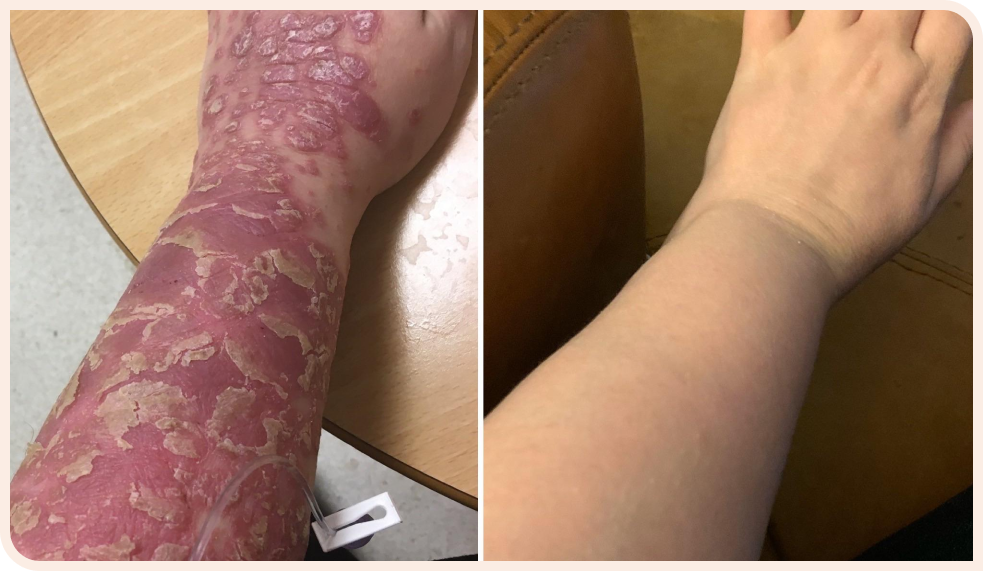
results
Frequently Asked Questions - Psoriasis Treatment in Pune
Psoriasis is a chronic condition - it cannot be permanently cured. However, with the right treatment plan, most patients can achieve long periods of remission where the skin is clear or nearly clear. The goal of psoriasis management at Skinsure Clinic in Baner is to keep flares infrequent and mild, reduce the body surface area involved over time and improve quality of life significantly. Many patients with well-managed psoriasis experience more months of clear skin than active disease over a year.
For mild plaque psoriasis (PASI below 10 and affecting less than 10% of body surface area), the first-line treatment at Skinsure Clinic is a combination of topical corticosteroids and vitamin D analogues (calcipotriol). These are used in a rotation protocol to prevent steroid skin-thinning: corticosteroid for 4 weeks followed by vitamin D analogue for maintenance. Moisturising the skin twice daily with an emollient is mandatory alongside any topical treatment. Mild scalp involvement is treated with a prescription medicated shampoo and scalp solution.
In most cases, no. The hair loss associated with scalp psoriasis is temporary and caused by inflammation disrupting the hair growth cycle. Once the scalp psoriasis is brought under control with treatment, hair density typically returns to normal over 3 to 6 months. However, in rare cases of severe, long-standing scalp psoriasis with chronic inflammation, some permanent follicle thinning can occur. This is why early and consistent treatment of scalp psoriasis is recommended - not just for skin comfort but to protect hair follicle health.
With topical corticosteroids, most patients begin to see plaque thinning and reduced redness within 2 to 4 weeks. Significant clearance on mild to moderate areas typically occurs by 8 weeks of consistent treatment. Scalp psoriasis responds at a similar rate with prescription shampoos and scalp solutions. Systemic therapy (methotrexate) shows initial improvement at 4 to 8 weeks and maximum response at 3 to 6 months. It is important to continue the full prescribed course and attend follow-up appointments at Skinsure Clinic for progress assessment.
Yes. Patients from Balewadi, Aundh, Wakad, Pashan, Hinjewadi, Pimple Saudagar and across PCMC visit Skinsure Clinic regularly for psoriasis treatment. The clinic is at the 7th floor of Lunawat Apex, Baner Road, behind the Nexa showroom near Sadhu Vaswani Nagar, Aundh, Pune 411007. Call 099606 03380 to book your consultation.