
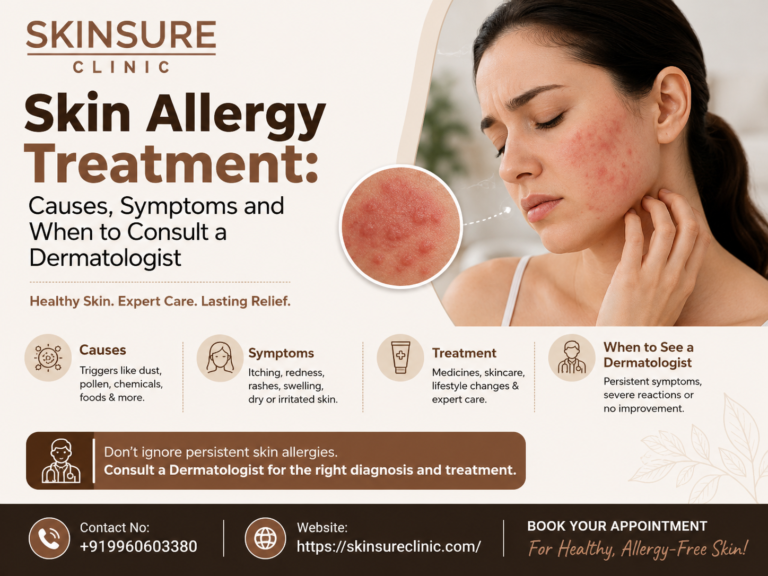
A new face wash, a pair of imitation earrings, a strip of painkillers or the weeds along a monsoon footpath can leave your skin red, itchy and swollen within hours. Skin allergies are a frequent reason people consult a dermatologist in Baner, Pune, and they are also often mistreated at home with whatever cream is lying in the drawer.
Short answer: Skin allergy treatment works in two steps. First, find and avoid the trigger. Second, calm the skin with care advised by a doctor, which may include a plain moisturiser, an antihistamine for itching and a prescription cream for inflamed patches. Mild reactions often settle within 2 to 3 weeks, though healing time varies from person to person. A rash that keeps returning, spreads or comes with swelling of the face or breathing trouble needs medical attention.
This guide covers skin allergy causes, skin allergy symptoms, skin allergy treatment options and the signs that tell you it is time to see a skin specialist.
Key Takeaways
• Trigger first: Skin allergy treatment rarely lasts if you keep touching, eating or applying the thing your skin reacts to.
• Itch is the signature: Allergic rashes itch more than they hurt. Pain, pus or fever points to something else.
• Patch testing finds hidden triggers: It is the standard test for allergic contact dermatitis and helps guide skin allergy treatment.
• Skip over-the-counter steroid mixes: Combination creams can thin the skin and make rashes return worse.
• Swelling of the lips, tongue or throat is an emergency.
What Is a Skin Allergic Reaction?
A skin allergic reaction happens when your immune system treats a harmless substance as a threat. The body releases histamine and other chemicals that cause itching, redness and swelling. The substance that sets this off is called an allergen.
Dermatologists group skin allergies into a few common patterns:
• Allergic contact dermatitis: An itchy, red and sometimes blistered rash where the skin touched an allergen such as nickel, fragrance or hair dye. It usually appears 1 to 3 days after contact.
• Irritant contact dermatitis: Not a true allergy, though it looks similar. Harsh soaps, detergents, sanitisers and frequent hand washing strip the skin barrier and cause redness, dryness and burning.
• Urticaria (hives): Raised, itchy welts that appear within minutes to hours, shift around the body and fade within a day. Foods, medicines and infections are common triggers.
• Atopic dermatitis (eczema): A long-term condition with dry, itchy patches that flare with sweat, dust, stress and weather changes. People with eczema react more easily to allergens and irritants.
• Drug rash: A widespread rash that appears days after starting a new medicine, often an antibiotic or painkiller.
Knowing the pattern matters, because skin allergy treatment for hives is quite different from contact dermatitis treatment.
What Causes Skin Allergies?
So what causes skin allergies? Effective skin allergy treatment begins with this question, and the trigger is often something you use every day. Common skin allergy causes include:
• Metals: Nickel in imitation jewellery, belt buckles, watch backs and jeans buttons.
• Fragrance and preservatives: Found in perfumes, deodorants, creams, wet wipes and even products sold as herbal.
• Hair dye: Para-phenylenediamine (PPD) in hair colour and black henna can cause severe scalp and face swelling.
• Cosmetics and adhesives: Bindi glue, kumkum, nail polish and eyelash glue.
• Plants: Parthenium (congress grass), which grows along roadsides and open plots, causes rashes on the face, neck and arms.
• Rubber and latex: Gloves, footwear and elastic bands.
• Medicines: Some antibiotics, painkillers and topical creams such as those containing neomycin.
• Food and insect bites: Shellfish, nuts and eggs can trigger hives, as can mosquito and bedbug bites.
• Weather and sweat: Humid monsoon months and dry winters both weaken the skin barrier and make flare-ups more likely.
What Causes Sudden Skin Allergies?
A sudden skin allergy usually follows something new: a new product, a new medicine, a new food or a change of detergent. Sudden does not always mean new, though. Allergic contact dermatitis can develop to a product you have used for years, because sensitisation builds up quietly over repeated exposure. Viral infections, stress and heat can also set off sudden hives.
What Are the Common Symptoms of Skin Allergies?
The common symptoms of skin allergies are:
• Itching, often intense and worse at night
• Skin redness and itching together, either in one patch or spread over an area
• Raised bumps, welts or hives
• Small fluid-filled blisters that may ooze and crust
• Dry, scaly or cracked skin in long-standing cases
• Burning or stinging, which is more common with irritants
• Swelling of the eyelids, lips or hands
What Does a Skin Allergy Rash Look Like?
A skin allergy rash often carries a clue about its cause. A rash under a watch strap or around the navel points to nickel. Eyelid rashes often come from nail polish or face products, since we touch our eyes with our hands many times a day. Rashes on the face, neck and forearms that worsen after time outdoors can point to plant exposure. Hives look different again: pale or red raised welts with clear edges that move to a new spot within hours.
How to Identify a Skin Allergic Reaction
Wondering how to identify a skin allergic reaction? Ask yourself these four questions:
• Timing: Did it start within minutes (hives) or 1 to 3 days (contact allergy) after something new?
• Location: Does the rash match the spot where a product, jewellery or fabric touched you?
• Main symptom: Is the itching stronger than any pain?
• Pattern: Does it fade when you stop the product and return when you use it again?
If most answers are yes, an allergy is likely. Some conditions look similar but need very different care. Fungal infections often form rings with a clearer centre in skin folds, and bacterial infections are painful, warm and may come with pus or fever. A steroid cream applied on a fungal infection can make it spread, which is why a proper diagnosis comes before any skin allergy treatment.
How to Treat Skin Allergy: Skin Allergy Treatment Options
How to treat skin allergy depends on the type and severity of the reaction. In most cases, skin allergy treatment combines trigger avoidance, skin barrier repair and medicines that control itching and inflammation.
Skin Allergy Remedies You Can Start at Home
For mild reactions, these simple skin allergy remedies are the first step of skin allergy treatment at home:
• Stop the suspected product: Remove the jewellery, go back to your old soap or stop the new cream.
• Wash gently: Rinse the area with plain lukewarm water to remove traces of the allergen.
• Cool compress: A clean cloth dipped in cold water, held for 10 to 15 minutes, calms itching and heat.
• Fragrance-free moisturiser: Apply a plain, unscented moisturiser twice a day to repair the skin barrier.
• Loose cotton clothing: Reduces friction and sweat over the affected area.
• Hands off: Scratching breaks the skin and invites infection, so keep nails short.
Avoid toothpaste, lemon juice, raw garlic or strong home pastes on a rash. These are irritants and can turn a mild rash into a chemical burn.
Skin Allergy Treatment for Itching and Redness
Depending on the type and severity of the reaction, a doctor may advise skin allergy treatment for itching and redness such as:
• Oral antihistamines: Reduce itching and hives. Non-drowsy options are taken in the day, and a doctor may add a sedating one at night if the itch disturbs sleep.
• Topical corticosteroid creams: Reduce inflammation. A dermatologist chooses the strength based on the body area, since facial and fold skin needs milder creams.
• Steroid-free creams: Calcineurin inhibitors such as tacrolimus are used on the face, eyelids and for long-term eczema.
• Calamine or soothing lotions: Give short-term relief from itch.
This part of skin allergy treatment also forms the base of itchy skin treatment for most allergy and eczema-related itch.
Please note: Medicines mentioned in this article are for general awareness only. The choice of medicine, its strength and its duration should be decided by a registered medical practitioner after an examination, so please avoid self-medication.
Skin Allergy Treatment for Rashes and Contact Dermatitis
Contact dermatitis treatment starts with allergy patch testing when the trigger is unclear. Small amounts of common allergens are placed on the back under patches and checked over 2 to 4 days. Once the allergen is identified, you get a list of products and ingredients to avoid.
For widespread or blistering rashes, skin allergy treatment for rashes may include wet dressings, a short supervised course of oral steroids and antibiotics if the rash has become infected. Skin irritation treatment for irritant dermatitis focuses on barrier repair, protective gloves and a switch to mild, soap-free cleansers.
Skin Allergy Treatment for Adults With Long-Term Symptoms
Skin allergy treatment for adults with chronic hives or eczema may go beyond creams. Options include regular long-acting antihistamines, phototherapy (controlled UV light treatment) and, in selected cases, biologic injections or other immune-modulating medicines prescribed by a dermatologist. You can read more about eczema treatment options if your rash is long-standing. Skin allergy treatment in adults may also include a review of workplace exposures such as cement, cleaning chemicals, hair products or rubber gloves.
A Word of Caution About Over-the-Counter Steroid Creams
Many people buy mixed creams containing a steroid, an antifungal and an antibiotic without a prescription. These creams may calm the rash for a few days, but long-term use can thin the skin, cause stretch marks, worsen fungal infections and lead to stubborn rashes that flare as soon as the cream is stopped. Self-prescribed creams are a common mistake in skin allergy treatment, so use steroid creams only as advised by a doctor.
Why Does Skin Allergy Keep Coming Back?
Why does skin allergy keep coming back even after skin allergy treatment? The usual reasons are:
• The trigger is still around: Nickel or fragrance can hide in products labelled natural or meant for sensitive skin.
• Sensitisation is long-lasting: Once your skin is allergic to a substance, it usually stays allergic. Treatment calms the reaction but does not erase the allergy.
• Cross-reactions: A person allergic to PPD in hair dye may also react to some textile dyes and black henna.
• Weak skin barrier: Dry, damaged skin lets allergens in more easily.
• Stopping treatment too early: The rash may look better before the inflammation has fully settled.
• Steroid cream misuse: Repeated self-use can cause rebound flares.
• Internal triggers: Chronic hives may be linked to infections, thyroid problems or other health conditions that need tests.
How to Prevent Recurring Skin Allergies
Prevention is an important part of skin allergy treatment, as it lowers the chance of repeated flares. Here is how to prevent recurring skin allergies in practical terms:
• Test any new skin product on the inner forearm for 2 to 3 days before using it on the face.
• Read labels and keep a list of the ingredients your doctor asked you to avoid.
• Choose fragrance-free and nickel-free products.
• Moisturise daily, especially after bathing and during dry months.
• Wear gloves for household cleaning and wash new clothes before wearing them.
• Cover your arms and legs when walking through weedy open areas.
• Keep a simple diary of flares, noting what you ate, applied or wore that day.
• Never restart a medicine that once caused a rash, and mention it to every doctor you see.
When Should I See a Dermatologist for Skin Allergy?
Knowing when to consult a dermatologist for skin allergy can help avoid complications, especially when home care has not helped and skin allergy treatment needs a medical plan. Consider consulting a dermatologist if:
• The rash does not improve after a week of avoiding the trigger and basic care
• It keeps returning and you cannot find the cause
• It covers a large area or spreads quickly
• There are blisters, oozing, crusting, pain or pus
• The face, eyelids or genital area is involved
• Itching disturbs your sleep or daily work
• You have used steroid creams for weeks and the rash returns when you stop
• The rash started after a new medicine
Seek emergency care immediately if a skin reaction comes with swelling of the lips, tongue or throat, difficulty breathing, wheezing, dizziness or fainting. These are signs of anaphylaxis. A rash with fever, peeling skin or sores in the mouth and eyes after starting a new medicine also needs urgent care.
Consulting a Dermatologist in Baner, Pune
Whether you consult a dermatologist in Baner, Pune or in any other area, a first consultation for a skin allergy usually follows a similar pattern. A skin specialist in Baner, Pune or any qualified dermatologist will typically examine the rash and ask about the products, medicines, food and work exposures in your daily routine. Based on this, the doctor may suggest tests such as patch testing so that skin allergy treatment is based on the actual cause.
It helps to carry the products you suspect, a list of the medicines you take and photos of the rash at its worst, since rashes often look calmer on the day of the consultation.
Frequently Asked Questions
What is the best treatment for skin allergy?
There is no single skin allergy treatment that suits everyone. In general, treatment involves identifying and avoiding the trigger, repairing the skin barrier with a fragrance-free moisturiser and using medicines prescribed for the type of allergy, such as antihistamines for hives and prescription creams for contact dermatitis.
What are the common symptoms of skin allergy?
Itching, redness, raised bumps or hives, small blisters, dryness and swelling are the common symptoms. Itching is usually the earliest and strongest sign.
How do I know if my rash is a skin allergy?
A rash is likely allergic if it itches more than it hurts, appears after contact with something new, matches the shape of the item that touched your skin and clears when you stop using it. A dermatologist can assess it through an examination and, where needed, patch testing.
Can skin allergies go away on their own?
Mild reactions often settle on their own within 2 to 3 weeks once the trigger is removed, even without prescription skin allergy treatment. The underlying allergy usually remains, so the rash can return on the next exposure.
What causes sudden skin allergies?
New products, medicines, foods, detergents, insect bites, infections and heat can all cause sudden reactions. Sometimes skin becomes allergic to a product that has been used for years.
How long does a skin allergy take to heal?
Individual hives usually fade within 24 hours, though new ones may keep appearing. Allergic contact dermatitis takes about 2 to 4 weeks to clear fully once the trigger is avoided and skin allergy treatment is started. Chronic eczema needs ongoing care.
When should I see a dermatologist for skin allergy?
See a dermatologist if the rash lasts more than a week despite home care, keeps recurring, spreads, blisters or involves the face. Go to an emergency department at once if there is swelling of the lips or throat or difficulty breathing.
Dr. Rashmi Lohiya : Dermatologist in Baner, Pune
[Address : Skinsure Clinic 7th floor, Lunawat Apex, Baner Rd, behind Nexa showroom, Sadhu Vaswani Nagar, Aundh, Pune, Maharashtra 411007 ]
[Contact No : +919960603380 ]